

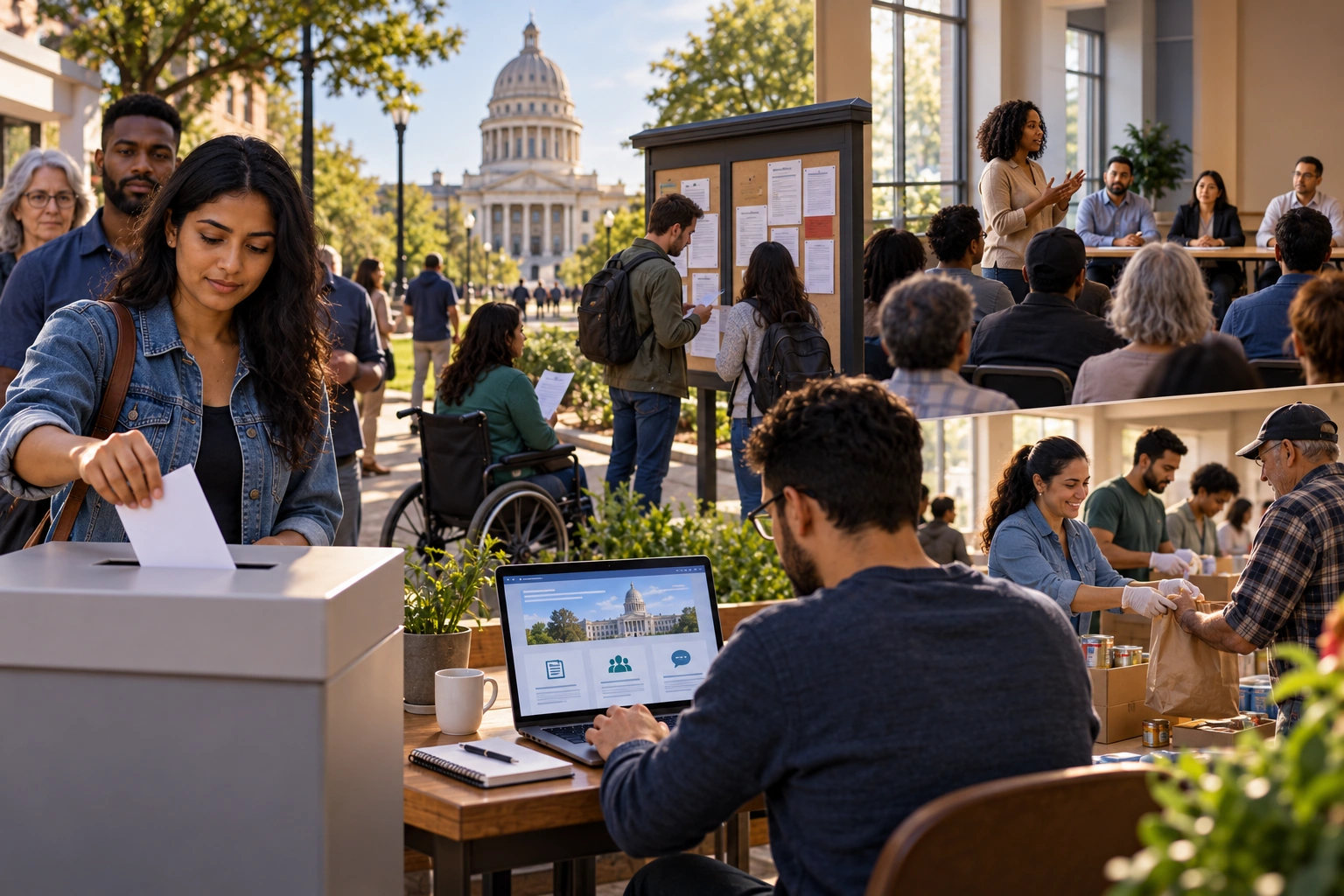
How Citizens Can Participate in the Democratic Process
Democracy is not limited to voting during elections. Citizens can participate in the democratic process in many ways, including learning about public issues, communicating with elected representatives, attending public meetings, joining community organizations, and taking part in lawful civic activities.
The opportunities available can differ depending on the country and its laws, but informed participation is an important part of democratic society.
Voting in Elections
Voting is one of the most direct ways citizens participate in government. Elections allow eligible voters to choose representatives or, in some systems, directly decide certain public questions.
Before voting, citizens can review official information about candidates, parties, policies, or ballot measures and consider how different positions relate to their own priorities.
Understanding registration requirements, voting dates, identification rules, and available voting methods can also help people participate effectively.
Learning About Public Issues
Informed participation begins with reliable information. Citizens can follow official government publications, legislation, election information, public budgets, and other primary sources.
News organizations, research institutions, and civil society organizations can provide additional perspectives. Comparing multiple credible sources can help people distinguish established facts from opinions, predictions, and disputed claims.
Contacting Elected Representatives
Citizens can communicate with elected representatives about issues affecting their communities. Depending on the governmental system, representatives may operate at local, regional, state, or national levels.
People can write letters, send emails, attend constituency meetings, or use official public contact channels. Clear and specific communication can help explain a concern or request information about a particular issue.
Attending Public Meetings
Many democratic institutions hold public meetings where government decisions, budgets, development proposals, and community issues may be discussed.
Attending these meetings can help citizens understand how decisions are made and what arguments different participants are presenting. Where public comments are permitted, residents may have opportunities to express their views directly.
Participating in Community Organizations
Community organizations can provide another way to engage with local issues. Residents may participate in neighborhood associations, charitable organizations, professional groups, educational organizations, or other civic groups.
Working collectively can help people identify shared concerns and communicate them through appropriate channels.
Taking Part in Public Consultations
Governments sometimes invite citizens to provide feedback on proposed policies, regulations, development plans, budgets, or other decisions.
Public consultations can take different forms, including written submissions, surveys, hearings, workshops, and community meetings. Citizens who participate should review the relevant proposal and provide specific, evidence-based feedback where possible.
Peaceful Civic Activities
Lawful demonstrations, public campaigns, petitions, and other forms of peaceful civic expression can allow citizens to communicate their views on public issues.
The rules governing demonstrations and other activities differ between jurisdictions. Participants should understand and follow applicable laws while exercising their civic rights.
Volunteering and Community Service
Democratic participation can also happen outside formal political institutions. Volunteering in community projects, helping local organizations, supporting educational initiatives, or participating in environmental activities can contribute to community life.
Such activities may not directly change government policy, but they can address local needs and strengthen connections among residents.
Understanding Laws and Public Institutions
Citizens can participate more effectively when they understand how their government operates. Learning about the roles of different institutions can help people direct questions and concerns to the appropriate authority.
For example, a local infrastructure issue may need to be raised with a municipal authority rather than a national government department. Understanding these responsibilities can make civic participation more practical.
Discussing Politics Responsibly
Political discussions are a normal part of democratic life. Citizens may have different opinions about policies, candidates, and public priorities.
Constructive discussion involves listening to different perspectives, checking factual claims, avoiding deliberately misleading information, and distinguishing disagreement over values from disagreement over facts.
Social media has made political discussion easier to share widely, but it also makes it important to verify information before passing it along.
Supporting Transparency and Accountability
Citizens can contribute to government accountability by paying attention to public budgets, official decisions, legislative developments, and government performance.
Where laws provide access to public records or information requests, citizens and organizations may use those mechanisms to better understand government activities.
Accountability does not require agreement on every political issue. It can involve asking questions, seeking evidence, and understanding how public decisions are made.
Final Thoughts
Participation in democracy extends beyond casting a ballot. Citizens can learn about public issues, communicate with representatives, attend meetings, participate in consultations, join community organizations, volunteer, and engage in lawful civic activities.
The most useful approach depends on the issue and the institutions involved. By staying informed, checking information carefully, and using available civic channels, citizens can take an active role in the democratic process while respecting the fact that different people may reach different political conclusions.